Friday, June 04, 2021


This is obscene

We all know multinational corporations cheat on their taxes, using complicated legal arrangements to funnel money through different jurisdictions to avoid paying anything to support the societies that host them. How obscene are such arrangements? This obscene:

An Irish subsidiary of Microsoft made a profit of $315bn (£222bn) last year but paid no corporation tax as it is “resident” for tax purposes in Bermuda.

The profit generated by Microsoft Round Island One is equal to nearly three-quarters of Ireland’s gross domestic product – even though the company has no employees.

The subsidiary, which collects licence fees for the use of copyrighted Microsoft software around the world, recorded an annual profit of $314.7bn in the year to the end of June 2020, according to accounts filed at the Irish Companies Registration Office.

The company’s profits jumped from just under $10bn in the previous year and compare with Ireland’s 2020 GDP of €357bn ($433bn).

Three-quarters of a country's GDP, not a cent in tax. Multinationals are simply parasites.

To use another comparison: Ireland's 2020 government spending was ~105 billion Euros (~US$127 billion). If they taxed this single corporation at the usual Irish rate of 12.5%, it would provide ~US$39 billion - or just under a third of all government spending. Not taxing them means Irish people are paying more and/or getting worse government services than they would if Microsoft paid their fair share. I'd expect them to be pretty angry about that.

This shows the need for international cooperation to stop tax-cheating, with a global minimum corporate tax, and a financial blockade of tax havens and money laundries until they join the system. Until we do that, these parasites are going to keep robbing us blind.

The change we need to see

Two big transport announcements from the government this morning: first, they're killing Mill Road, another bloated superhighway with a terrible BCR. Secondly, Auckland will get a second harbour bridge for bikes and pedestrians. The net effect: fewer cars, more bikes in Auckland.

This is the sort of change we need to see. Transport is New Zealand's second-biggest source of greenhouse gas emissions after agriculture. Reducing it means decarbonisation, switching to EVs. But it also means "mode shift" - ditching cars entirely for other methods of transport. Bikes and walking are a vital part of that, but to get people doing it, we need to actually provide the infrastructure. We also need to make driving suck more, to push people away from it. This decision will do both.

The amusing bit is that this is all about increased costs, and the big driver of those is... higher house prices. Waka Kotahi couldn't afford to buy out all the people they'd have to move for their road at current inflated rates. So the government which has refused to tackle the housing crisis has been hoist by its own petard. Maybe this means the trucking industry will start pushing for cheaper houses...?

Thursday, June 03, 2021


Climate Change: No wiggle room

Farmers are constantly whining at the thought of having to take even minimal measures to reduce emissions. But according to Climate Commissioner Rod Carr they no longer have any choice:

Dr Carr told hundreds of people - including farmers - at an agricultural climate change conference in Wellington today that for the agricultural sector there would be no way to wriggle out of slashing emissions.

He said in the past there had been a mindset in the agricultural sector that it should get exemptions because it was such an export powerhouse, but New Zealand's trading partners were increasingly making decisions based on the climate impact of products.

He said foreign regulators would not take kindly to exporters not pulling their weight, and this, combined with changing international consumers preferences, posed a much greater threat to business than local regulations.

Basicly, farmers can cut emissions in New Zealand, or their products can be border taxed and subjected to consumer boycotts by other countries. The former at least means they have some control over the process. Unfortunately, from the RNZ story, it seems that too many of them are still in deep, deep denial about this. But their whining about "financial sustainability" and being forced out of business misses the fact that this is now the point: we want dirty polluters who won't change to go under. The question is how many other people they take down with them.

An accomplice to war crimes

That's the only way to describe MFAT, who are merrily approving weapons exports to help the United Arab Emirates' ongoing crimes against humanity in Yemen:

The Ministry of Foreign Affairs and Trade approved the export of weapons systems sent to the United Arab Emirates (UAE) despite officials warning they could be used in Yemen.

Since 2016, at least seven export permits have been approved for military equipment sent by New Zealand companies to the UAE and Saudi Arabia, both of whom are accused of war crimes over their military intervention in Yemen.

At least 100,000 people have died in Yemen's civil war, which has also displaced millions and pushed the country to the brink of famine.

As the story makes clear, this is not a matter of ignorance. MFAT knows the weapons will be used in Yemen, which makes their export both a violation of our export control regime. And they know that what is happening in Yemen is a crime against humanity. But they seem willing to ignore both to enrich the immoral weapons industry (and in fact seem to see that, rather than enforcing international law, as their major role).

This is not acceptable, either legally or politically. And MFAT needs to be held to account for it.

Wednesday, June 02, 2021


This is what institutional racism looks like

Last month, a man was arrested for threatening to kill National MP Simeon Brown. Over the weekend a second man was arrested on the same charge. This is appropriate: threatening to kill is a criminal offence, and threatening to kill an elected representative an offence against democracy. But it appears that not all MPs receive equal protection under the law:

The complaint comes after a YouTube video posted last weekend made specific threats towards Māori Party leaders Debbie Ngarewa-Packer and Rawiri Waititi, and Māori people in general.

Ngarewa-Packer said the party lodged a complaint on Monday and didn't hear back till Wednesday.

Although the video had now been taken down, there were grave concerns for the leaders.

The contents of the video were hateful and racist, referencing violence towards Māori and "civil war".

From the RNZ verison of the story, the police were trying to minimise the threats, calling it a mental health issue. Which seems like a clear-cut case of institutional racism. And its exactly the sort of failure which led to 51 people being murdered in Christchurch.

We should not tolerate parties which tolerate this

In the wake of National MP Nick Smith's resignation on Monday night, people have finally been talking about what a scumbag he was. Newshub reports that his behaviour was an open secret around Parliament, something everyone knew about but no-one talked about, with people saying (anonymously, for fear of repurcussions):

  • "Smith was notorious for that red mist"
  • "One of the most difficult assholes I've ever worked for"
  • "I have no fond memories of that guy"
  • "He was prone to bouts of extreme verbal anger towards other ministers and staff. It was out of the ordinary even then. But we didn't complain because we were Gen Xers. We should have"
Meanwhile Stuff reports that the complaint which led to his resignation was not lodged by his immediate victim, but by "another National Party staffer who recorded the incident and made a complaint". Which suggests that Smith's behaviour was so toxic that his own staff were habitually recording him to document it. Which raises the obvious question: why do parties put up with this? Because as Smith shows, abusive MPs are a PR bomb waiting to go off, and when they do it damages both the party (who are rightly suspected of covering up and/or condoning abuse) and our political system as a whole. They're simply bad politics. So why not downlist, de-select, or otherwise show them the door to remove the risk?

Sadly, the answer seems to be that the main parties are staffed by bullies and run by bullies. Judith Collins is out there this morning defending Smith, saying he was under "tremendous stress" and suggesting that recording his outburst was illegal (which is getting pretty DARVO). But then, she's a bully herself. As for Labour, Meka Whaitiri (who allegedly assaulted a staff member) is not just still in Parliament, but has been reappointed to Cabinet. So Labour supports bullying as well. Voters should not. And we should make that clear at the ballot box.

Tuesday, June 01, 2021


NZDF gives the finger to the Burnham inquiry

Last year, the inquiry into Operation Burnham reported back, finding (among other things) that SAS and NZDF officers had deceived Ministers and the public, and that NZ soldiers had assaulted a prisoner. So will anyone ever be held accountable for that? Of course not:

Two soldiers at the centre of the Operation Burnham inquiry have escaped punishment by the Defence Force, including a Special Air Service soldier who assaulted an Afghan detainee.

Former SAS commander Brigadier Chris Parsons would not face disciplinary action after he had committed an “administrative failing” in a report, Chief of Defence Air Marshall Kevin Short said in a statement.

The SAS soldier that was found to have punched a detainee, who was not named throughout the inquiry, would not be censured because the matter was not properly investigated at the time, he said.

[That "administrative failing" was deliberately misleading the Defence Minister about whether the Operation Burnham raid had killed civilians, and then doctoring records to cover it up].

This is basicly NZDF saying "fuck you" to the entire inquiry, and to the public concern which led to it. They've been clear throughout this entire debacle that they don't think anyone did anything wrong, and now they're using their own coverup and years of delay as an excuse to ensure that those responsible are never held accountable. Rather than being dishonourably discharged and stripped of their honours as they deserve, the criminals at the heart of this will continue to serve, and by their presence continue to corrupt our defence force. And NZDF's senior leadership is perfectly happy with that.

That being the case, I think we need to admit that NZDF as an institution is unsalvageable. They are committed to unaccountability and deceit. And since all they actually do in practice is drag us into other people's wars, maybe we should just do away with the entire organisation, and replace it with a civilian civil defence and foreign aid corps, freeing it up to focus on its core - and valued - competencies: rescuing lost trampers, sandbagging stopbanks to limit flooding, and rebuilding schools after tropical cyclones.

Climate Change is already killing us

One of the big risks from climate change is that it will make large chunks of the planet uninhabitable due to heat and humidity, and if you've read The Ministry for the Future you'll be aware of how it can lead to death on a massive scale. But there's also going to be a constant trickle of deaths just from warmer temperatures. And this is already happening:

More than a third of all heat-related deaths around the world between 1991 and 2018 can be attributed to human-induced global heating, research has found.

[...]

The researchers examined past weather conditions simulated under scenarios with and without emissions triggered by human activity – allowing them to separate the warming and related health impact linked with human activity from natural trends.

Overall, they found 37% of all heat-related deaths in the locations studied were attributable to human activity – but the largest climate change-induced contributions (more than 50%) were in southern and western Asia (Iran and Kuwait), south-east Asia (the Philippines and Thailand) and Central and South America.

They don't give an actual bodycount (and they note that their data is incomplete and missing some of the potentially most interesting data points), but it shows the danger we are already in, and how those pushing for inaction are literally killing us. They're basicly stochastic murderers, and we should treat them as such.

Monday, May 31, 2021


Good riddance to a climate criminal

Nick Smith has announced his retirement from Parliament to beat a news story on his bullying. Good. As the announcement makes clear, his "employment issue" is about him being a bullying arsehole, and people like that should have no place in our Parliament. But beyond that, he's also a climate criminal, having fought tooth and nail for over twenty years to prevent action on climate change. He opposed carbon pricing in opposition, and gutted the ETS as Climate Change Minister. The floods the South Island is experiencing today? His actions - or rather, his deliberate inaction - helped cause them. And one day, he should be held responsible for that in court.

The cost of cheapness

Last week, in the wake of the budget, Stuff's Thomas Coughlan had a rather pointy article about how the government systematically mismanages public finances, by only measuring the cost of doing things and ignoring the cost of not doing them. Job-creation, which reduces welfare spending and increases taxes? Cost. Child-poverty, which has enormous long-term benefits for health, crime, education and other social statistics, leading to big savings across the board? Cost. Fixing climate change, reducing the likelihood of enormous floods in future? Cost. And we're receiving a rather graphic demonstration of this right now, with the ongoing ransomware attack on Waikato DHB, which has basicly disabled it for two weeks. Because of course there was a proposal to upgrade DHB IT security to reduce the risk of such attacks, which of course was shitcanned on cost grounds:

The Ministry of Health abandoned an effort to secure all district health board computer systems citing budget constraints.

The Government also has not followed through on its Cyber Security Strategy 2019 which promised annual reports around cybersecurity breaches.

[...]

Stuff has seen messages between IT industry vendors showing high-ranked Ministry of Health technology personnel discussing a more advanced cybersecurity system with the industry in 2019. Conversations ended because the department said it had no approved budget to pay for the proposed system.

Obviously IT security is imperfect, and there's no guarantee that this would have protected Waikato DHB against the current attack. But in the current context, it looks like an awful mistake. And what drove this mistake was exactly what Coughlan wrote about: the government seeing everything as a cost. As for the cost of their cheapness, well, the people of Waikato get to pay that, while Ministry of Health executives laugh all the way to the bank.

Denmark's traitorous spies

Denmark has been spying on Germany for the NSA:

Denmark's secret service helped the US National Security Agency (NSA) to spy on European leaders, including German Chancellor Angela Merkel and President Frank-Walter Steinmeier, a European media investigation published on Sunday revealed.

The disclosure that the US had been spying on its allies first started coming to light in 2013, but it is only now that journalists have gained access to reports detailing the support given to the NSA by the Danish Defense Intelligence Service (FE).

The report showed that Germany's close ally and neighbor cooperated with US spying operations that targeted the chancellor and president.

The then chancellor candidate for the German center-left socialist party (SPD), Peer Steinbrück, was also a target, the new report disclosed.

As the article notes, we'd known they were cooperating with the Americans to spy within the EU since 2013. What's new is the targets, which are explosive. And its not just Germany that was targetted: the article says they also spied on politicians in Sweden, Norway, the Netherlands and France.

The good news is that the Danish government sacked the entire leadership of the FE last year over this. But the fact it even happened is highly disturbing, and really makes you wonder who the EU's spy agencies are really loyal to: their own European governments, or their American "allies". And of course it raises similar questions about who our spies are really working for, and how many of our friends they're spying on for America.

Thursday, May 27, 2021


Climate Change: A duty of care

Hot on the heels of last night's decision in the Netherlands that the right to life requires Shell to reduce emissions, an Australian court has ruled that ministers owe young people a duty of care over climate change:

The federal court of Australia has found the environment minister, Sussan Ley, has a duty of care to protect young people from the climate crisis in a judgment hailed by lawyers and teenagers who brought the case as a world first.

Eight teenagers and an octogenarian nun had sought an injunction to prevent Ley approving a proposal by Whitehaven Coal to expand the Vickery coalmine in northern New South Wales, arguing the minister had a common law duty of care to protect younger people against future harm from climate change.

Justice Mordecai Bromberg found the minister had a duty of care to not act in a way that would cause future harm to younger people. But he did not grant the injunction as he was not satisfied the minister would breach her duty of care.

In other words, the decision hadn't been made yet. But the strong implication of the last bit is that if the Minister approves the project (especially without strong consideration of climate change impacts and how they may be mitigated), the decision will be overturned.

New Zealand has both an enforceable right to life in the BORA, and similar common law to Australia on the duty of care. So while not precedent here, both cases could be persuasive to New Zealand courts, and provide further weight to the Zero Carbon Act's "permissive considerations" clause. But we won't really know that until its argued.

Poisoning the well in Samoa

Samoa's Court of Appeal (which is actually the other half of its Supreme Court) will be hearing the appeal on the women's quota on Monday, with a decision due on Wednesday or Thursday. The decision would end any pretended uncertainty about the constitutionality of parliament or who has a majority, and the caretaker regime has apparently promised to respect it. So its quite surprising to see their Attorney-General attempting to have all the judges disqualified:

The office also applied for the disqualification of the presiding judges, “given their potential conflicts of interest and potential favouritism”, a press release from the attorney-general said.

“All four cases between FAST [party] and the Government all went against the Government and favoured FAST ... there is now substantive evidence before our office that is questioning the appearance of impartiality and integrity of the judiciary presiding over this matter,” the attorney-general said.

Alternatively, perhaps the regime lost all those cases because their arguments were weak and their position tenuous? But obviously, that can't be it...

The HRPP's solution is for the case to be heard by overseas judges, who they will appoint. Which will of course take time to recruit, leaving the regime in power. And since in the regime's opinion parliament cannot possibly be convened until this case has been heard, no-one will be able to vote them out. Its just a further example of their attempts to use process to frustrate both democracy and the courts. But its also a clear setup for them to refuse to accept any decision which does not go their way. Which is the real underlying problem here: a government which refuses to accept the judgement of the courts, or more importantly the judgement of the people.

Climate Change: A massive victory

Big oil is the big barrier to real action on climate change. But now a Dutch court has ordered Shell - one of the biggest oil companies in the world - to cut its emissions:

A court in the Hague has ordered Royal Dutch Shell to cut its global carbon emissions by 45% by the end of 2030 compared with 2019 levels, in a landmark case brought by Friends of the Earth and over 17,000 co-plaintiffs.

The oil giant’s sustainability policy was found to be insufficiently “concrete” by the Dutch court in an unprecedented ruling that will have wide implications for the energy industry and other polluting multinationals.

The Anglo-Dutch company was told it had a duty of care and that the level of emission reductions of Shell and its suppliers and buyers should be brought into line with the Paris climate agreement.

Note "and buyers" - this isn't some pissy scope 1 emissions measure which only looks at how much they drive and how much paper they use. Instead, they're basicly being ordered to cut oil production, and on human rights grounds (climate change is accepted as a threat to the right to life). And the latter provides precedent for similar cases in jurisdictions which comply with UN human rights standards (which, for the time being, includes the UK, HQ of BP. The other oil majors are headquartered in the US, which has no enforceable right to life).

Shell will appeal, of course. And then they'll probably try some dubious restructure and pretend that this nullifies the court order. But if they want to do business anywhere in the EU (including dodging taxes and laundering money through EU jurisdictions), they're going to have to comply. And hopefully there will be similar cases against other oil companies forcing them to as well.

Wednesday, May 26, 2021


You can't manage what you don't measure: Improving OIA statistics

Back in 2017 the then-SSC published the first set of performance statistics on the Official Information Act. The statistics were crude: just the number of requests handled, the number and percent on-time, the number published on the agency's website, and the number of complaints and final views issued by the Ombudsman. But it immediately allowed some problems to be identified, and there was a commitment that:

Over time the information on performance that is gathered and published will increase to provide a more comprehensive picture of compliance with the letter and spirit of the Act.
That hasn't happened, and five years on, we're still using the same crude stats, with a crude focus on timeliness we were using in the beginning. Its not like they didn't think about it: in late 2017 they published agency guidance on Selection and Reporting of Official Information Act Statistics, encouraging agencies to collect and report additional statistics to give a better view of their performance. But there was no real followup: Te Kawa Mataaho Public Service Commission does not even bother to monitor what statistics agencies collect. In September / October 2019 they cautiously proposed a limited expansion of statistics to include whether information was released (granted in full / granted in part / refused / publicly available), and possibly some information on extensions and transfers, but nothing has come of it. And in the meantime agencies have learned to juke the stats, with an increasing number of extensions for "consultations" to meet timeliness targets, or in the case of the police, packing the stats with a vast number of requests which are not legally OIAs to hide their utter failure to obey the law. And they are able to get away with this because of the crudeness of our statistics. And you only have to look at the UK, which publishes full annual statistics on timeliness, outcomes, and withholding grounds used, to see that we could be doing a lot, lot better.

So what could they do to produce immediate improvements? Back in February I used the OIA to survey core government agencies on what OIA statistics they collected, using their 2017 guidance as a template. The raw data (including links to responses) is here. The good news is that most government agencies already collect or report the information TKM-PSC proposed in 2019, and most also measure the time taken to process requests or to extend them. Which means that with a bit of leadership for TKM-PSC we should be able to get full UK-level stats on timeliness, extensions, and outcomes. Which would show us a bit more where agencies are falling down and how they're juking things.

So will they do it? Its literally their job, and I've been told by TKM-PSC staff that their Minister, Chris Hipkins, is fully committed to open government. If that's the case, then fixing this seems to be an obvious and easy way to show it. You can't manage what you don't measure. So start measuring this, and let public expectations start managing it.

Tuesday, May 25, 2021


Climate Change: How the ETS keeps emissions high

Stuff reports today that Refining NZ has reached an in principle agreement to shut down the Marsden Point oil refinery and move to importing refined fuels. Which should be good for emissions - as best I can tell from Emissions Tracker, Marsden Point is responsible for 664,000 tons of CO2 (being the only liquid fuel refining facility in the country). Thanks to a past sweetheart deal, none of that is covered by the ETS, and they weren't scheduled to enter it until 2023. The shutdown is explictly driven by their desire to avoid ETS costs.

This is exactly what the ETS should be doing: polluters who can clean up, polluters who can't shut down. And in the case of Marsden Point, its a success. But Marsden Point is an exception, and with other major industrial polluters - Tiwai Point or Methanex, for example - their shutting down won't actually reduce emissions. Why? Because the permits they would have bought to cover their emissions will still be free to be bought by someone else, meaning they can be used to pollute now or in the future. While supposedly intended to reduce emissions, the ETS actually locks us onto a high emissions pathway, where pollution shutdowns don't reduce pollution.

(This might not be so much of a problem if that pathway was steep enough to push us towards a credible emissions reduction goal. But ours isn't. And because future ETS budgets are set five years in advance, we're basicly locked into a pathway which keeps prices low and emissions high, rather than the other way round).

How do we fix this? The obvious move is that we remove permits from the system whenever a major polluter shuts down, by immediately reducing future auction allocations accordingly. This would change the fixed cap in the ETS into a permanently sinking one, and mean shutdowns actually result in emissions reductions, rather than creating space for someone else to pollute instead.

Monday, May 24, 2021


Lessons from Samoa

Samoa's parliament was meant to meet this morning, on the last possible day following their elections in April, to swear in MPs, elect a Speaker, and demonstrate where confidence lies. Instead, the HRPP's former Speaker - who retired at the election and is no longer an MP - took the keys and locked the new parliament out of the building. This is expected to be used by the HRPP as "justification" for new elections: "parliament couldn't meet (because we stopped it), a government couldn't form (because we refused to recognise it), so time for the people to correct their error and endorse us again".

There are no doubt lawyers arguing in the Supreme Court right now to get an explicit order upholding the constitutional requirement that parliament meet today (or just to determine who is Speaker and how far their power under the Legislative Assembly Powers and Privileges Ordinance 1960 extends). Based on the court's previous rulings, there's some hope for a peaceful and democratic outcome. OTOH, with the former government simply refusing to accept the results of elections and nakedly defying court orders, that may be too much to hope for.

What lessons can we draw from this? People often say that New Zealand needs a written constitution (as if our Constitution Act and BORA and other legislation didn't exist), or at the least, that we should nail down more of the current "unwritten" powers in statute to prevent abuses. I support the latter position, because its always useful to know what the rules are. But that's exactly what Samoa did - their constitution eliminated the reserve powers, and specifically enumerated the head of states powers to call and dismiss parliament and the circumstances in which that could happen. And none of that helped. The problem in Samoa isn't that constitutional powers are unclear, giving scope for disagreement, but that the HRPP are wilfully ignoring them, and ignoring the courts when they do their duty to interpret the constitution.

What ultimately protects democracy is not just clear constitutions - that helps, but the USA is a perpetual counterexample - but politicians actually being democrats, and respecting democracy and the rule of law. Samoa's problem is that the HRPP, or at least its leadership, don't (and this has been clear for a while, with their constant attempts to prevent other parties from forming to challenge them, and to bring the judiciary under their thumb). Instead, Tuilaepa is basicly a Pacific Trump. And once that poison is in your system, you need to excise it quickly, before it infects everything. Hopefully Samoa is up to the job.

Thursday, May 20, 2021


Labour actually does something

So, against expectations, the Labour government has actually done something, reversing the 1991 benefit cuts with a significant increase to benefits to levels at least (and usually higher) than those recommended by the Welfare Expert Advisory Group (and yes, I checked). Its good, it corrects a historic wrong, and it will help - at least until landlords raise rents to steal it all for themselves. Which highlights the need for more work, especially around housing and renter's rights.

But before we get too carried away, they're also planning to shift unemployment benefits to an ACC-style "social insurance scheme" with a limited duration. I'm really not sure this is a good idea. While (short-term) rates will increase, there's the obvious question of what happens when the support period runs out and how it copes with long-term unemployment. It will also make the scheme subject to the same pressures as ACC around interest rates, and allow the right to perpetually scaremonger about how it is "going bankrupt" and use that as an excuse to cut rates or worse, privatise it (something they tried to do to ACC in the late 1990's). Direct government control and a pay as you go system means there is direct government responsibility, matching our social expectation that no-one in this country should go hungry or homeless. An insurance model seems to undermine that.

And then there's climate change, which Grant Robertson explicitly says is next year's problem. He blamed this on the timelines set by the Zero Carbon Act, but this is bullshit. Nothing stops the government from acting in advance of the Commission's recommendations, and starting work on cutting emissions now. Except of course their own propensity for foot-dragging and delay. This is not a problem we can afford to piss around on; instead we have to throw everything at it now, otherwise we won't have a future worth living in.

Update: So, there's $300 million for as-yet-undefined EV incentives. That's a start, but we're going to need a lot more than that to decarbonise within a decade like we need to.

Surrendered

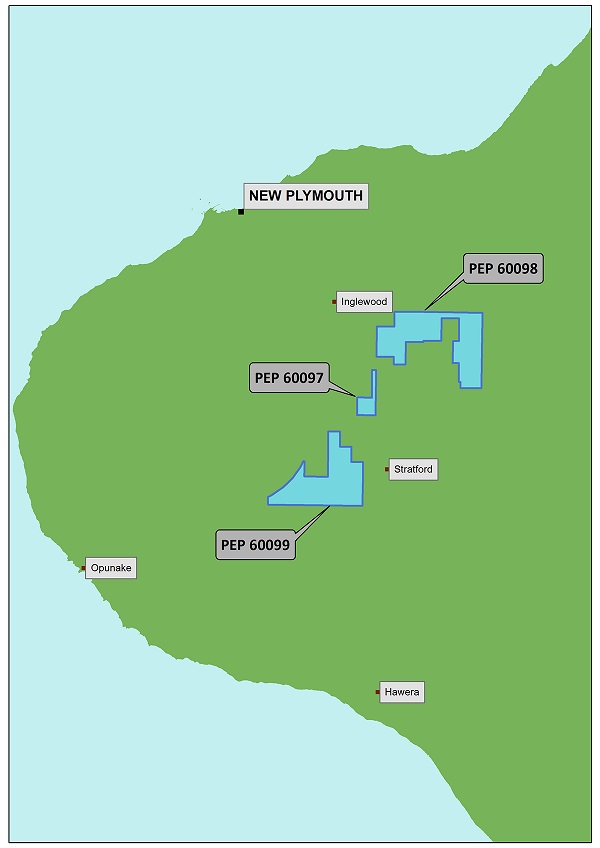
Greymouth Petroleum has surrendered three oil exploration permits in central Taranaki. There's been no media coverage, but I noticed while doing a routine check of exploration permits that the map looked a little different, and checking with the permit spreadsheet pinned down the missing permits as 60097, 60098, and 60099. A query with NZPAM confirmed that they were surrendered on 16 May 2021. According to the 2015 block offer (when the permits were granted) he surrendered area totals 121 square kilometres. Map below:

GPpermits

(Meanwhile NZPAM is still showing the supposedly surrendered offshore South Island permits as still being active, so I'm not sure what's going on there)

Wednesday, May 19, 2021


Austerity kills transparency

Back in March, we learned that the promised review of the Official Information Act had been deferred indefinitely due to resource constraints: The Ministry of Justice had been told to do too much by their Minister, so it was dumped. At the time, I thought that this was due to policy changes after the election. But according to new documents released by the Ministry of Justice, the rot set in much earlier.

In September 2019, the Ministry recommended a review of the OIA. In November 2019 they followed this up with a budget bid for Budget 2020. This was clearly being progressed, and in February 2020 they got as far as drafting a Cabinet paper. But in the end, it was "never provided to the Minister or sent outside the Ministry of Justice". And unfortunately we don't know why, because there are no more documents, and the Ministry conveniently didn't take notes in apparent violation of the Public Records Act and Public Service Commission guidance.

The Cabinet paper has been withheld entirely as "free and frank advice" (which is naturally off to the Ombudsman), and large chunks of the budget bid are redacted as "confidential" despite this review being shitcanned. But in the bits they left in, there are explicit statements that the Ministry was unable to do the review without extra funding:

However due to resourcing constraints and an over-subscribed work programme the Ministry cannot commit to a review of the OIA in the next 2-3 years.
And:
Current funding for the Policy Group is insufficient to take on substantial new projects without trading off against other priorities. A review of the OIA is highly unlikely to proceed under these constraints because of its impact on other high priority Government and Ministerial projects.
In other words, Labour's ongoing austerity seems to have killed any effort to improve transparency. The Ministry took another go after the 2020 election, drafting a briefing in September 2020 in anticipation of a post-BIM discussion. In the end it was not finalised, after Kris Faafoi indicated his policy priorities did not include transparency.

Which is a shame, because the budget bid makes a clear case for reform, stating that "[w]ithout a review, ongoing concerns about compliance with the OIA and with the legislation itself are likely to remain unaddressed" and delivering a damning assessment of the current state of the law:

The OIA is 37 years old and has not substantially changed since enactment. It no longer reflects its operating environment or developments internationally. It is perceived as outdated and lacking in credibility.
And a year later, its even more so. It would be nice if the government finally decided to fix one of the foundations of our democracy.


