Showing posts with label Wages. Show all posts

Wednesday, July 15, 2026


National's New Zealand

How bad are things under the Luxon regime? We already knew that we had the worst wage growth in the world, with wages 6.4% below 2021 levels - which shows the lie of National's "economic growth". But what does that mean in reality? The Press headline from today speaks for itself: "Police are dealing with a new type of shoplifter - ‘everyday people’ who just need to eat":

A year ago, Sergeant Melissa Shaw’s retail crime team was set up to curb retail theft in Christchurch.

Shaw expected to deal mainly with drug addicts who repeatedly steal to fund their next hit. And there have been those.

But then came the surprise: A growing cohort of thieves who were not drug addicts, not kleptomaniacs, not youths.

They were parents and elderly people with no criminal histories, without the money to keep up with rising living costs, who stole food and clothing for themselves and their families.

And that's where we are now: normal people having to steal to get buy, because National's "rockstar economy" doesn't provide for them, and instead funnels everything upwards into the pockets of Luxon and his mates.

We desperately need to get rid of this government. So in November, vote for regime change!
Tuesday, December 16, 2025


National has fucked the economy

National's core promise as a government is to be "better economic managers" (meaning: bald men in blue suits). And they made specific promises last election to return the government to surplus by the next election. So how's that working out for them? Terribly:

There is still no surplus in sight, according to Treasury’s latest economic forecasts.

Treasury sees the deficit deepening further, from $14.0 billion in the year to June 2025 to $16.9b in 2025/26, before narrowing to $60 million in 2029/30.

While this is an improvement from when Treasury last published forecasts at the May Budget, it still undershoots National’s pre-election pledge to return the books to surplus by 2026/27.

Unmentioned in any of the media coverage (which is all about surpluses and GDP and debt) but in the HYEFU is that unemployment still hasn't peaked and will remain high as far ahead as treasury is looking, while wages won't grow. So life is going to suck for normal people, no matter what the overall economy does.

And all because Nicola Willis crashed the economy by cutting everything and sacking everyone. Worse, she's promising more of the same, in a desperate effort to meet that self-imposed budget target.

The evidence is clear: things won't get better until we remove this government and replace it with one which understands that making things better requires investment, not cuts. The sooner the election, the better!

Wednesday, August 17, 2022


"Economic stability"

Stuff reports that workers have had the biggest pay rise in more than 20 years. This should be great news - ordinary people are better off! But naturally, the Reserve Bank is there to ruin the party, hiking interest rates to throw people out of work. And they're pretty explicit about why:

"Production is being constrained by acute labour shortages, heightened by seasonal and Covid-19 related illnesses. In these circumstances, spending and investment continues to outstrip supply capacity, and wage pressures are heightened.
Yes, they have to tank the economy because ordinary people are making too much money. And then they wonder why people view the entire institution as scam to keep the rich rich and everyone else poor.

If the problem is too much money in the economy, the government could always tax it away, and do so in a way which reduces rather than exacerbates inequality. We could tax those windfall corporate profits, for example. Or just go all out and tax the rich properly. But apparently that's just not an option, so those least able to afford it get to carry the can so the rich can have "economic stability". Because it turns out that "economic stability" for the rich means instability and insecurity for everyone else.

Wednesday, May 04, 2022


29,000 employed under Labour

The quarterly labour market statistics were released this morning, showing unemployment holding at a record low of 3.2%. There are now 94,000 unemployed - 29,000 fewer than when Labour took office.

Average wages are also up, and looking back, they've increased from $30.45 / hour in 2017 to $36.18 today. Which is still running quite nicely ahead of inflation. Though the CPI has been higher for the past year, and people are going to be wanting compensation for that, so I guess we can expect much squealing from business about "wage inflation" and "labour costs" and the "need" to be subsidised by cheap immigrant labour - in other words, for workers to pay the price rather than them. Which is not something a decent country should let them get away with.

Monday, July 12, 2021


Saying the quiet bit out loud

Normally when people complain about unemployment, its that its too high. But the Employers and Manufacturers Association is complaining that it is too low. Why? Because it might mean they have to raise wages and compete for workers:

Unemployment is at present estimated at 4.5 percent and trending down. But the Employers and Manufacturers Association argues it needs to be closer to 5 percent, to make it easier to recruit and retain staff, and constrain wage inflation.
This really is saying the quiet bit out loud: that NZ business relies on the government to maintain structural unemployment to suppress wages and keep profits high. But it gets worse, because they then explicitly link it to immigration as well:
"And I think really what's exacerbating the problem is, we haven't got immigration. We might be able to cope with 3 to 4 percent unemployment, in terms of finding people, if we have the other side of the equation which is immigration."
Business (or at least the body purporting to represent them) views immigration not as a way of welcoming new citizens, but as a regulatory subsidy. No need to improve pay or conditions if you can just exploit a migrant! No need to change your sector's business model if you can just bring in someone who doesn't know that people don't work 18 days in a row with no breaks here! But the pandemic (and the petri-dish states breeding new and nastier variants) means the borders are unlikely to open anytime soon. Which means business will have to compete and innovate. Things like actually training staff, rather than expecting there to be someone with the perfect skill-set available from overseas or just waiting around due to structural unemployment. Offering better, more flexible conditions. And above all, paying more. And the sooner business gets the message the market is sending, rather than whining for the government to put its thumb on the scales for them, the better off we'll all be.

Finally, one of the reasons we have a housing crisis is because housing costs have massively outstripped wages. You know what would fix that? A decent bout of "wage inflation". But clearly the EMA doesn't want workers to have houses either.

Monday, March 11, 2019


The solution is obvious

Another day, another employer whining about a "labour shortage". This time its rest homes:

Resthomes say they are exhausted by the constant struggle to find nurses to replace those they lose to better paid jobs in public hospitals.

[...]

Aged Care Association chief executive Simon Wallace said last year's district health boards' pay rise for nurses continues to strip resthomes of nurses.

"When you've got pay in the public hospitals at sometimes $5 or $6 an hour on average more, it is very difficult to hold onto our nurses."


Well, maybe they could increase wages by $5 or $6 an hour then. Its not as if they can't afford to: rest home companies are hugely profitable. If they build those profits on gouging their workers, and then find themselves with no-one to gouge, then that's no-one's fault but their own. And if they claim that they are unable to operate profitably while paying their workers what they're worth, then that seems to be an argument for nationalising the sector, to remove the wasted money that their profit represents.

Thursday, February 21, 2019


Their own fault

Another day, another employer whining about "worker shortages". This time, its Wellington's public transport operators, NZ Bus and Transdev:

Six Wellington train services have been scrapped indefinitely, while bus commuters can expect cancellations for at least the next six months as an "unprecedented" driver shortage continues to wreak havoc on the capital's public transport system.

[...]

Many of Tranzdev's drivers had left to join KiwiRail, which paid more and was expanding its operations, [Transdev chief operating officer Mike] Fenton said. It also gave drivers a change from driving electric trains.

Metlink spokeswoman Emily Liddell said Tranzdev expected to lose 12 per cent of its 100-plus drivers this year, up from its average annual turnover of 3.5 per cent.

[...]

Meanwhile, NZ Bus, which has been cancelling up to 30 buses a day in the morning peak in recent days, said it was 20 drivers short and was struggling to attract any applicants at all.


According to a Radio New Zealand report, NZ Bus wants the government to declare a skills shortage, allowing them to bring in foreign drivers. But once again, this "shortage" is a shortage at the price employers want to pay. Transdev pays less than KiwiRail (and less than Australian operators). NZBus lowballed their contract bid and took their profit margin out of their workers' wages - with the result that most of them simply left and those that remained went on strike. So its not really surprising that people no longer want to work for them. As for the solution, it seems obvious: better pay and conditions. But that might mean the operators make lower profits, so its apparently completely off the table, and instead they're asking for a regulatory subsidy.

As for how to force this, both companies now seem to be in breach of their contract, and unwilling to deliver the services they are contracted to provide. GWRC needs to make it clear to them that either they deliver those services or be replaced. They should not tolerate lowball operators destroying public infrastructure with low wages.

Friday, February 15, 2019


Why is Labour subsidising bad employers?

The government has declared a seasonal labour shortage for Hawke's Bay, effectively subsidising employers with cheap migrant labour. But why do they have a labour shortage? Perhaps those same employers' attitude to wages have something to do with it...

Fruit may be left on trees and businesses face closure as steep rises in the minimum wage hit labour-intensive industries such as horticulture.

Many exporters were facing higher costs due to employment law changes and the minimum wage lifting to $17.70 an hour on April 1, an increase of $1.20, a survey of 400 exporters by ExportNZ has found.

Businesses with 75 to 120 staff said the minimum wage increase would add an extra $120,000 to $800,000 to wage costs a year.


This "labour shortage" is a shortage of labour at the price employers are willing to pay. The solution is for them to offer better pay and conditions to attract the people they need. Instead, a "Labour" government has given them a regulatory subsidy to stop them from having to increase wages.

Bad employers shouldn't be subsidised. If they can't make a profit when paying decent wages to their workers, they don't deserve to be in business. It is that simple.

Tuesday, January 08, 2019


Another "labour shortage"

Hawke's Bay apple growers are whining about a seasonal "labour shortage" and demanding they be subsidised by immigrant labour again. But the "labour shortage" is illusory - its not that there is a shortage of people to do the work, but a shortage of people willing to do it (in the hot, hot sun, in the middle of nowhere, with no job security etc) at the price employers are willing to pay. Which suggests an obvious solution: if apple growers want people to pick their apples, they should offer more money. Otherwise the fruit can and should just rot on the trees.

Tuesday, August 07, 2018


There's an easy solution for that

Today, the government finally settled pay talks with DHB nurses, giving them a significant pay rise and boosts to staffing. Meanwhile, another major employer of nurses - rest homes - are whining about it:

Rest homes say they are losing nurses to public hospitals at an alarming rate.

They are blaming higher wages being offered to hospital nurses, and say changes to immigration requirements are needed.

[...]

Chief executive Simon Wallace said nurses had always moved between the sectors but it was far more pronounced now, driven by pay rises being offered by district health boards in ongoing pay talks.

He said it was driving pressures in rest homes that received a 2 percent DHB funding boost this year.


There's an easy and obvious solution, of course: they could pay their nurses more. Its not as if these businesses can't afford to: Ryman healthcare made a profit of over $200 million last year, and Oceania made $77 million. But instead, they're demanding they be subsidised with migrant labour so they can avoid paying the going rate for staff. And the response of the government should be a firm "no".

Wednesday, July 12, 2017


The obvious solution

Auckland schools are complaining about a teacher shortage again:

More than half of Auckland schools are each struggling to fill up to four teaching jobs, a new survey reveals.

Sixty-six per cent of schools across the region took part in the survey, which found more than 50 per cent had three or four teacher vacancies.

Auckland Primary Principals' Association president Kevin Bush said of those, more than half had advertised four or five times, spanning several months, and even then still failed to fill the roles.

He said it was the worst shortage he'd seen in 30 years.


And its entirely unsurprising, in light of stories like this and this. National's housing bubble means that even those on decent wages like teachers can no longer afford to live in Auckland. As for the solution, its called an employment market. If schools can't find enough teachers at the wages they're offering, clearly they need to offer more. If they don't, then they have no-one but themselves to blame if qualified staff pursue better options elsewhere.

Wednesday, May 17, 2017


A self-inflicted "shortage"

The Bus and Coach Association is concerned about the lack of bus drivers:

There's concern a shortage of bus drivers across the country is set to reach an all-time high.

The Bus and Coach Association says it's struggling to find drivers, and it's meaning managers and workshop staff are getting behind the wheel.

Ritchies transport director Andrew Ritchie is normally behind the desk, but even he's been getting behind the wheel.

"At the moment it's sort of starting to hit a peak, it's just getting very very difficult," Mr Ritchie says.


Hmm. I wonder if this has anything to do with it? Or this? Driving a bus is badly paid and has poor conditions - and its getting worse due to the grasping bus companies underbidding on contracts and keeping their profits by driving down wages. Which hardly encourages people to become drivers.

In short, this is a "shortage" entirely of the bus companies' own making. They have the power to fix it themselves, and they should, rather than whining about it.

Monday, November 07, 2016


A good idea

Human Rights Commisisoner Dr Jackie Blue thinks its time to force companies to disclose their gender pay-gaps:

Women's pay and their presence in the workplace hierarchy aren't progressing quickly enough, says Equal Employment Opportunities Commissioner Jackie Blue.

So she's now calling for a law forcing major New Zealand companies to declare their gender pay gap.

Dr Blue says she would like to see New Zealand adopt a new UK law which applies to every company with more than 250 employees.

"They tried the voluntary approach, didn't work, so they're bringing in legislation. There's going to be a penalty if they don't comply of about £5000. It's still too low," she told the Nation.

"But just across in Australia, they've been doing that since 2012 for companies over 100, so this is not like a weird idea."


I agree. Public information - and the public pressure that results from it - is one of the best ways to force employers to obey the law. At present, they get away with discriminatory pay rates because its done in secret: they don't tell us (or the government) that they're doing it, while gag clauses in employment contracts prevent their employees from discussing pay rates and finding out. But whether a company is breaking the law is not private information. Instead, sunlight is the best disinfectant. Employers should be forced to provide this data, and justify any pay gaps that exist.

National will never do it: their dead white male caucus is deeply in the pocket of the dead white male business class which benefits from this discrimination. If we want a more equal society, we need to change the government.

Thursday, February 19, 2015


Because obviously the tourism industry can't pay people more...

Queenstown has a problem: its a tourist-trap, so no-one can afford to live there. Which means they have a labour shortage. In a free market, the solution is obviously that employers need to offer more money, so as to attract the required workers. But that might affect profits. So instead, they've got the government to give them open-slather for foreign labour.

We have 5.7% unemployment - and National would rather than employers exploited foreign backpackers than pay kiwis enough to live on. Isn't it so very, very National?

Friday, October 03, 2014


Equality is still 50 years away

The New Zealand Income Survey was released today, showing that the gender-pay gap in median hourly earnings had narrowed slightly from 10.1 to 9.9%. Which is progress, particularly given that we went backwards last year - but at this rate, equality is still 50 years away. Which simply isn't good enough.

Women shouldn't have to wait 50 more years for equal pay. Our government needs to do something. Sadly, I think its low on their priority list.

Wednesday, August 13, 2014


Wages and productivity

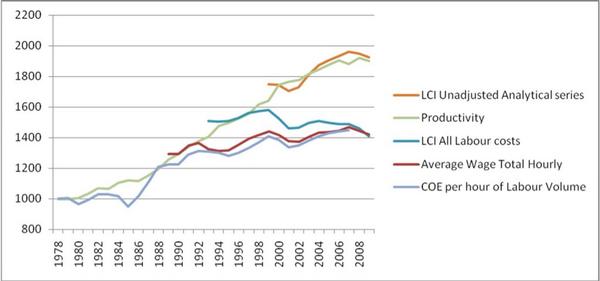
When confronted with evidence about our low-wage economy, business claims that wage increases have to be justified by increases in productivity. But as the graph below shows, productivity has increased massively, but employers have welched on their end of the deal:

productivity-wages

(Graph stolen from @publicpurpose)

How have they been able to get away with this? Because the Employment Contracts Act tilted the balance towards bosses and enabled them to artificially suppress wages. And even Labour's reforms under the Employment Relations Act didn't do much to change the trend.

This is nothing more than social pillage. We need to end it.

Wednesday, July 30, 2014


A bottom-up plan for inequality

Labour released its "work and wages" policy today. The headlines? Abolishing the 90-day law and increasing the minimum wage by $2 to $16.25 an hour by April 2015. Those are fairly obvious ways of delivering to their core constituency, but there's more: imposing a "good employer" requirement on all government contracts, and running a commission of inquiry into industrial relations, which will (eventually) mean a rewrite of the Employment Relations Act.

Overall, this looks to be a significant move to tackle inequality and the low-wage economy. Traditionally, we've done this by supplementing low incomes with government transfers, but that breaks down when wages are so low that you need schemes like working for families to keep the middle classes afloat. Increasing wages, both directly through the minimum wage, and indirectly through the ratchet effect and better employment law, achieves the same effect from the bottom up. It costs the government a lot less, but the downside it its potentially more unstable - people recognise immediately if a government is cutting their working for families payments (which is why National has been very careful about doing so and is instead just eroding them through inflation), but they're not so quick to notice when it effectively cuts their wages by strengthening the power of employers.

And on the gripping hand: all these policies did last time Labour was in government was stop the rise of inequality. If we want to see it actually drop, we need stronger measures, such as sharply more progressive tax rates. Labour is not committed to those measures. What they're offering is a more tolerable business as usual, not change.

Friday, June 27, 2014


Fixing Christchurch

Labour has announced another part of its package to fix Christchurch: an immediate crash home-building plan:

A Labour government would build 100 "high-quality modular" houses for Christchurch in its first four months and have a further 300 of its Kiwibuild homes ready within six months.

The commitment is part of a plan to build 10,000 affordable homes in Canterbury, addressing what Labour housing spokesman Phil Twyford calls the broken free-market "tweaking" of planning laws in National's rebuild.

[...]

Fewer than 1000 of the 12,000 to 15,000 houses needed in Canterbury had been built after three and half years, he said.

Only 25 per cent of the state house repairs has been done, and of the 700 state house rebuild that had been promised a year ago, only 29 had been completed.


The market has failed, so the government has to step in. Its that simple. As for why the market has failed, there's the ongoing insurance problems of course, but perhaps this also has something to do with it: wages for builders, plumbers, and the other workers required to rebuild Christchurch haven't kept pace with the living costs there. Or, to put it another way, the construction industry is simply pocketing increased rebuild costs.

In this context, Labour saying they'll bring workers in from overseas if necessary looks like a betrayal. There are workers here. They're just not paid enough to work in Christchurch. Importing people with lower living standards expectations isn't a solution to that problem - it just creates more exploited, desperate people. And that doesn't sound like a very labour-oriented policy to me.

Wednesday, December 18, 2013


Positive side-effects from the living wage

Last week, Wellington City Council adopted a living wage for its staff. One of the criticisms of the move was that it only applied to direct employees of the council, and that contractors and CCO employees would miss out. But it looks like the Council is going to solve that problem too - by returning services in-house:

The Wellington City Council has today voted not to continue contracting out its parking services and instead to directly employ the workers.

“The council’s decision to take parking services in-house and directly employ this part of their workforce is a good decision for the existing workforce and the city,” said Service and Food Workers Union (SFWU) National Secretary, John Ryall today.

The parking services workers are members of the SFWU.

“It is our understanding that the existing workforce will be able to move to these jobs,” said John Ryall. “This is great news for our members and their families, as they will also move to the living wage, along with the rest of the Council’s directly employed workforce.”


This is a good move. Contracting out has been one of the major drivers of poverty wages, as parasite contractors lowball each other and then make workers pay for their bidding strategy (while of course collecting fat fees themselves for their "work" as middlemen). And the nature of contracting strips the workers of leverage for industrial action - they can strike, but their legal employer can credibly say that they have money to give because of the lowball bid price, while their real employer can switch contractors to avoid the effects of a strike. So its good to see Wellington City Council beginning to reverse that entire toxic system, and accept responsibility for those who work for it.

Wednesday, December 11, 2013


A living wage for Wellington

Wellington City Council has just agreed a living wage policy for its staff. Good. Local authorities are legally required to be good employers, and this should include paying their staff enough to actually live on. There's been a series of OIA requests through FYI to various local authorities requesting living wage information, and the results are pretty dismal - payment of substandard wages seems to be widespread. But with Auckland and Wellington moving in the right direction, it will hopefully force the others to end this exploitative practice - and push the labour market in the right direction as well.