Friday, December 05, 2014


The NSA pwns Vodafone

Overnight, The Intercept spilled the beans on AURORAGOLD, the NSA's programme to hack the world's cellphone providers. They spy on cellphone operators to gain knowledge of network architecture and vulnerabilities, and deliberately introduce vulnerabilities into new technology (something which exposes us to hacking not just by them, but by everybody else as well). The article included a classified map (from here, p. 24), which showed their degree of penetration. The interesting bit? New Zealand was on it:
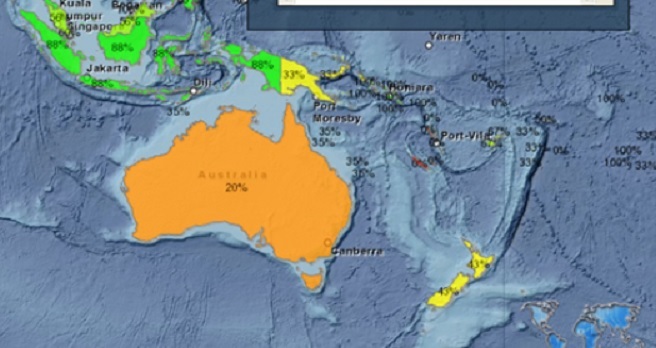
nsa-nzphones

That "43%" is the level of network coverage - basically, what proportion of the total NZ cellphone market they've compromised. The data dates from 2012. So who had about 43% network coverage in 2012? Vodafone:

The Commerce Commission Telecommunications Monitoring Report 2012 showed that our market share by connections was 42% as at 30 June 2012.

And the NSA - our "allies" - pwns them. We're basically the target of a programme of cyberwarfare by the United States, our supposed "allies".

Which raises an obvious question: why isn't the GCSB protecting us from this? It is, after all, their job. They should be helping to secure Vodafone's network, not collaborating with the foreign hackers who want to exploit it.

That map also reveals an interesting fact: the NSA has compromised cellphone networks within all of its Five Eyes partners except Canada - and we are the most compromised of all. Which raises another question: if membership of Five Eyes doesn't protect us from this, why are we a member?

No consideration of corporate manslaughter

In the aftermath of the Pike River disaster there were calls for New Zealand to introduce a corporate manslaughter offence to allow grossly negligent corporations (and their directors and managers) to be held liable when they killed. The government's response to these calls was to say "we'll consider it". And when John Key announced that he was abandoning the bodies in the mine, he again hid behind that, saying that more advice had been sought.

So how seriously did National consider corporate manslaughter? A recent request on FYI, the public OIA requests website, gives us the answer: not seriously at all. In three years, they produced just eight documents: seven file notes and a short briefing. The actual advice in all those documents has been censored as "confidential" under s9(2)(f)(iv), but this is not the paper trail of a government considering policy change (that would involve more briefings, draft Cabinet papers, escalating to a Cabinet decision). Most tellingly, there's nothing since September 2013. The upshot: officials took a brief look at it, considered some international examples, and the government decided not to do anything. And why would they? After all, negligent corporations are their donors and cronies - hardly people they want to throw in jail.

Incidentally, those redactions of "confidential" advice? They're unlawful. As the Ombudsman's guidelines make clear, the clause protects the ability of the government to "consider" (undisturbed by the noisy peasantry, who will be presented with a fait accompli) advice. Once advice is no longer being considered, once a decision has been made, it no longer applies. In this case a decision has clearly been made not to proceed. And that means there is no longer a case for the government to hide it from us.

Thursday, December 04, 2014


A modern Treaty breach

Back in 2011 the Rena ran aground on the Astrolabe Reef and spewed oil all over the beaches of Mt Maunganui. But the government didn't push hard for compensation, and once the initial cleanup was done, it didn't push hard for the wreck to be removed and the reef restored to its pristine state. Instead, it stuck its hand out for a $10 million bribe for allowing the Rena's foreign owners to leave their toxic waste on the reef. Now, the Waitangi Tribunal has ruled that that action breached the Treaty:

The Crown entered into a Wreck Removal Deed as part of its October 2012 settlement with the Rena owners, which obliged the Crown to consider, in good faith, supporting an application by the owners for resource consent to leave the wreck on the reef.

Today's Tribunal decision found the obligations in the deed placed the Rena owners in a special position in the resource consent process in a way that could significantly affect Maori interests in Otaiti.

The Crown signed the deed without having sufficient knowledge of Maori interests in the reef and without having consulted affected Maori, despite it having been "both practical and important" for the Crown to have done so.

The Tribunal found the Crown's conduct breached the Treaty principle of partnership and mutual benefit.


Its unclear what the government should do to remedy this, but an apology to the affected iwi and an acknowledgement of wrongdoing would be a good start.

Unbelieveable

Yesterday and today in Parliament, Defence Minister Gerry Brownlee swore that no decisions had been made on any troop deployment to Iraq. Meanwhile, the NZDF has already begun training to send a company there:

Up to 150 infantry troops are in pre-deployment training for Iraq, despite government assurances no decision has been made, NZ First MP Ron Mark says.

Mark, NZ First's defence spokesman and a former army major, said troops had known as early as last month they were entering pre-deployment training for Iraq, yet Defence Minister Gerry Brownlee denied any decision had been made.

Mark said the Government had been "economic with the truth".

"They've not been open with the public and they're not answering questions with complete honesty," he said.

Mark said sources had told him 150 people had been earmarked for deployment and told they should prepare for deployment between the end of February and the beginning of March.

Phase 1 of the training started on Monday and would continue until December 18.


The NZDF has said they're doing this without any instruction from the Minister. So what do we believe? That the Minister is lying to us? Or that the army has gone rogue and is preparing to get its war on without approval from Cabinet or Parliament? And if the latter, is that really how the military should operate in a free and democratic society?

National's big achievement

We're no longer the least corrupt nation in the world:

New Zealand has fallen from its top spot as the world's least corrupt country being pushed out by Scandinavian nation Denmark.

In the 2014 Corruption Perceptions Index released today New Zealand was ranked the second least corrupt out of 174 countries.

The index which compiled by Transparency International, ranks countries based on how corrupt their public sector is perceived to be.


Our actual score hasn't dropped (yet); instead we've been overtaken by Denmark because we haven't kept up with international efforts to combat corruption. But as Bryce Edwards points out, the survey data all predates July 2014 and the pre-election corruption scandals (including Dirty Politics). So, we may be in for an actual drop next year, rather than just being overtaken.

But regardless of the reason, no longer being "the least corrupt nation in the world" is a blow to our national identity, and one National should be held accountable for.

Ministerial expenses in Australia

In New Zealand, Minister's expenses are open information, released every three months. The knowledge that their spending has to be justifiable to the public has (with a few exceptions) improved Ministerial behaviour; Ministers don't spend public money on big dinners or porn because they know that if they do, they'll be on the front page of the Dominion-Post.

Meanwhile, over the Tasman its a different story:

Defence Minister David Johnston's office is in chaos, with two staff members shown the door as the Defence Department launched an investigation into a damaging leak of the minister's expense receipts.

The departure of the two staff members came on the morning that leaked receipts revealing restaurant bills racked up by Senator Johnston and his chief-of-staff Sean Costello were published in the media.

[...]

Senator Johnston's spokesman said the Defence Department was investigating the leak of the restaurant receipts, which showed that Senator Johnston and Mr Costello spent thousands of dollars last month on restaurant bills entertaining defence industry heads and foreign dignitaries.

The receipts were leaked to News Ltd in what appears to have been an effort to damage Senator Johnston and Mr Costello.

They reveal, among other things, the purchase of bottles of wine costing $190 each and meals totalling up to $300 a head.


So, Ministers rort the system, use public money for private extravagance, and sack people for blowing the whistle on their greed. No wonder Australia has gone down in the corruption rankings...

Wellington's people should vote on its supercity

So, the Local Government Commission has recommended that the Greater Wellington region get the supercity treatment, with One Mayor To Rule Them All from Rongotai to the Wairarapa. Colour me unsurprised. National's local government "reforms" were designed to enable such forced mergers, by removing the old provision that they had to be approved by voters. And that, right there, is my reason for opposing this. Amalgamation in the Wellington region may be a good idea - but that's a question for the people who will have to live under it, not for a clique of unaccountable bureaucrats and a gaggle of local body politicians thirsting to be SuperMayor (with a supersalary to match). And its a question for each existing local authority city or district whether they want in or out. National's strapped chicken rules don't provide for that (instead, voters in one area can force amalgamation on their neighbours), and until that changes, the only democratic position is to oppose all forced amalgamations.

The good news is that it will be easy to get a vote:

A small section of Tararua District that is currently within the regional council boundary which transfer to the Manawatu-Wanganui region.

There are 11 properties in that area, so all it will take to force a referendum is a handful of people. But then there's the prospect of the people of the Hutt and Wairarapa being outvoted by the people of Wellington and Porirua. But if the latter want to amalgamate, they should, and leave others out of it.

Wednesday, December 03, 2014


Saving freedom of information in Australia

Earlier this year the Australian government decided to do away with the Office of the Australian Information Commissioner (OIAC) - their equivalent of the Ombudsman for freedom of information appeals - as a cost-saving measure. Rather than being heard by a specialist agency, freedom of information appeals would instead by heard by an administrative tribunal, at a cost of nearly $1000 per complaint. But the government has now been forced to withdraw the bill from the Senate, after it failed to gain the support of Senate crossbenchers.

This is great news, but there's a problem: the OIAC had already prepared to be shut down, and as a result most of its staff have already left. So Australia keeps its watchdog, but the government's attempt to kill it have left it blind and toothless. Which will no doubt please Tony Abbott - his government is the least open in living memory and has been welching on its international open government commitments. A blind and toothless watchdog suits Abbott just fine.

New Fisk

Capture of Isis leader's wife is another murky tale from the pit of marital scandals

Councils and CCTV

Over the past decades, local authorities have put up hundreds, possibly thousands, of CCTV cameras as part of traffic management and community safety programmes. What gets watched and who has access to the footage varies by council. The result? City council cameras staring into people's homes and bedrooms, with the footage available to any plod who wants it:

The privacy commissioner is to question all councils on how they collect and store CCTV footage, after it was discovered that cameras in Lower Hutt had been able to film inside private homes for years.

Live and recorded footage from Hutt City Council's 29 cameras near the city centre could be viewed by anyone in the Lower Hutt police station, without a secure log-on. About half a dozen of the cameras could be swivelled remotely towards houses.

An audit by Security Risk Management, commissioned by the council, found: "There was an absence of privacy masking, enabling some street surveillance cameras to undertake surveillance inside private homes."

The surveillance risked flouting five principles of the Privacy Act and the Bill of Rights, according to the report.


The council says that no breach occurred, because there's no evidence. But where people's privacy is concerned, that's not good enough, and so they've been forced to install privacy masking, access limits, and warning signs in areas under surveillance. More importantly, the Privacy Commissioner is also investigating every local authority in New Zealand, to see whether they being used in accordance with the Privacy Act. Hopefully it won't turn up any more disasters like this.

Time to close failed charter schools

Last year, the government approved five charter schools to open in 2014. A year on, how are they doing? Badly. One of them, Vanguard Military School, has seen its roll drop by 25%, while another, Te Kura Hourua ki Whangaruru, has seen a larger drop as well as serious problems with poor teaching quality, management infighting, and drug use. So, that's a 40% failure rate, after just one year.

When John Key introduced charter schools, he promised that

"If those partnership schools don't succeed the Government will be just as quick to close them down as we have been to establish them."

Its time for him to make good on that promise, and close down these failed schools. We shouldn't be paying for failure, and we definitely shouldn't be paying massively more than we pay for state schools just to subsidise the profits and extravagant salaries of charter school operators.

Member's day

Today is a Member's day, the last one for the year. After some Questions to Members about a couple of bills, the House will consider Sue Moroney's doomed Parental Leave and Employment Protection (Six Months' Paid Leave) Amendment Bill, followed by the second readings of Pita Paraone's Sentencing (Protection of Children from Criminal Offending) Amendment Bill and Kennedy Graham's Register of Pecuniary Interests of Judges Bill, both of which are also expected to fail. We're still at least two member's days away from a ballot, so we're not going to see anything new on the Order Paper until February or so.

Tuesday, December 02, 2014


This'll work well

Buoyed by his fantastic success in New Zealand, Kim Dotcom wants to launch the Internet party in the United States:

Internet entrepreneur Kim Dotcom says he will be "Hillary's worst nightmare" as he revealed plans for a US version of the Internet Party.

Dotcom, who is fighting extradition to the US where he is wanted on piracy charges took to Twitter today to announce the new political movement.

"The Internet Party is coming to the United States in 2015. Stay tuned for our celebrity founders from the music, film and Internet industry," Dotcom posted.


This is a mad idea. It is extremely difficult to break into politics with a new party. What made the Internet Party potentially viable in New Zealand was MMP, and an alliance with Mana supposedly guaranteeing it a seat (whoops). The US has neither of those advantages. Instead, it has an extremely regressive form of FPP, with gerrymandered districts and restrictive ballot-access laws designed to keep politics firmly in the grasp of the current oligarchy. On the plus side, he's free to throw millions of dollars at candidates in an effort to buy a result, but while he's rich by New Zealand standards, Dotcom is a minnow in the US funding pool. US donors blew US$3.7 billion buying influence in this year's midterms; Dotcom's paltry millions are a drop in the bucket.

Reported back

The Foreign Affairs, Defence and Trade Committee has reported back on the Countering Terrorist Fighters Legislation Bill. As expected, it has a few tweaks - a shorter sunset clause, a reduction of the time for "urgent" warrantless surveillance from 48 to 24 hours - but only one major change: the new surveillance powers will be restricted for use in terrorism cases. Which means we'll no doubt see the SIS defining redefining people as "potential terrorists" in order to stick cameras in their bedroom to gather "intelligence".

But this isn't a victory. The government will still be able to ban people from travel for ten days on no evidence whatsoever and revoke passports for up to three years with no judicial oversight. And the SIS and police will still be able to use Customs' warrantless border search powers to make an end-run around the provisions of the Search and Surveillance Act.

And Labour - our "left-wing" party - is backing all this. They don't deserve your vote, and neither does any other party which supports this bill.

Just the beginning

The Key/Kitteridge Countering Terrorist Fighters Legislation Bill isn't even law yet, and the SIS are already planning their next power grab:

The Prime Minister has signalled the Government will look to introduce much tougher security laws after a review next year.

John Key said the Countering Terrorist Fighters Bill, due to be reported back to Parliament today, was just the beginning.

He said a full review of security settings would consider broader changes to intelligence-gathering and counter-terrorism.

Mr Key said it would potentially look much further than the current legislation before Parliament.


You got that? 4824-hour warrantless surveillance and the spies being able to stick cameras in people's bedrooms to gather "intelligence" are "just the beginning".

This is why it is so important for Labour to oppose the bill: to make clear public disquiet and strip Key of his self-proclaimed "moral mandate" for more spying. Instead, they're collaborating in it. And this is why they're useless as an opposition, and will be more useless as a government.

I will not vote for a party which supports spying. Neither should you.

Monday, December 01, 2014


A new ANZAC force?

John Key is apparently planning a new ANZAC force for Iraq:

New Zealand and Australia are in talks around forming a joint force to serve in Iraq against Isis (Islamic State) a century after the first Anzac force was created, Australian media are reporting.

Sydney's Daily Telegraph this morning said it had confirmed that Australian defence figures had been in discussions with New Zealand officials around the joint force.

Prime Minister John Key had also been in private discussions with Australian Prime Minister Tony Abbott to explore the possibility of joint Anzac taskforce consisting of several hundred troops, the Daily Telegraph reported.

It is estimated that a further 400 Australian specialist soldiers could be sent, along with an as-yet-unknown number of New Zealand troops.


So once again we're going to join Australia to go off and fight an unwinnable battle for our foreign imperial masters. All we need are some foreign generals to lead us to disaster, and the parallel will be complete.

This isn't our fight, and there is no good to be done there. New Zealand should stay out of Iraq.

Equality comes to Finland

Finland has legalised same-sex marriage, becoming the 12th European state to do so:

The Finnish parliament has narrowly approved a citizen’s initiative to legalise same-sex marriage.

Gay couples in Finland have been able to enter into registered partnerships since 2002, but until now the country was the only in the Nordic region not to allow same-sex marriage. Finland is now the 12th European state to do so.

In the vote, 105 members of parliament supported the legal amendment while 92 opposed it.

The measure will end the distinction in Finland between same-sex unions and heterosexual marriages and give such couples equal rights to adopt children and share a surname.


Northern and western Europe are now firmly pro-equality. Which means the battle will now move to central Europe - Germany, Austria and the Czech Republic. Meanwhile, former Soviet Europe is firmly bigoted, with Texan-style constitutional provisions to enforce inequality. It is going to be a long struggle to get them to recognise this fundamental human right.

A fatal flaw in the SIS's argument

What's the argument for the SIS's new video surveillance and urgent warrantless search powers? They won't say, but from the comments of the committee, its clear that they've been told in their secret briefing that the powers are to stop terrorism. One of the National MPs (I think it was committee chair Mark Mitchell?) was explicit, asking a submitter about the prospect of a Woolwich-style attack, "a New Zealand serviceman walking along the street, being cut up with meat-cleavers and machetes" (paraphrased). Clearly, they expect the new powers to be used to directly prevent such attacks, with the SIS using urgent warrants and video surveillance to gather the required evidence to prevent it.

But there's a problem: legally, the SIS cannot act to prevent such an attack. The SIS's core function (as laid out in its governing Act) is "obtain, correlate, and evaluate intelligence relevant to security". However, that Act also says that

It is not a function of the Security Intelligence Service to enforce measures for security.

What's "enforc[ing] measures for security"? An IGIS report from earlier this year gives an example. The SIS had delivered a "warning" to a man they (incorrectly) believed was conspiring to assassinate a foreign head of government. The Inspector-General found that this contravened the Act and ordered the SIS to cease the practice until they had received advice from Crown Law on its legality.

And this makes sense. The SIS are not the police. They are there to gather intelligence, while the police are there to protect public safety and prosecute criminals. "Measures to enforce security" - disruping terrorist attacks, arresting spies - fall into the latter category, not the former.

So what should the SIS do if they gain intelligence suggesting a terrorist attack in New Zealand? Turn it over to the police. Section 4H of the SIS Act allows them to provide the police with information on "serious crime" (anything punishable by two years imprisonment, so burglaries and minor assaults apparently qualify), and the police have urgent search powers of their own they can then use. The police can gain all the information the SIS would hope to gain, except with legal oversight and full admissibility in court, allowing would-be terrorists to be prosecuted.

In short: the SIS does not need these powers, and cannot use them for the purpose they're selling them as being useful for. And if they have actually told the committee that they're for stopping terror attacks (rather than, say, gaining blackmail on people they wish to turn into informants), then they've lied to the Committee and need to be prosecuted for breaching Parliamentary Privilege.

(Yes, I have sent in a supplementary submission about this; I didn't realise it until halfway through the hearings)

New Fisk

Do you know the difference between a Holocaust and a holocaust? The Armenians do

Earning their salaries

On Thursday, the Foreign Affairs, Defence and Trade committee started hearing submissions on John Key's (or maybe I should just call it Rebecca Kitteridge's) Countering Terrorist Fighters Legislation Bill. Normally MPs get to go home on Thursday evenings for constituency work and to see their families - but the select committee didn't. They sat all day on Friday, until nine or ten at night, then were back at 8am on Saturday morning for more. And they're still at it today, calling back the SIS director and Inspector-General to hear their thoughts on the views of submitters.

This has been forced on them by the ridiculously tight timeframe the government has set for the bill - they need to report back tomorrow. But still: the committee has worked very hard here and done their best so we can have our say. MP's work incredibly long hours, and the committee has gone even further. They have definitely earned their salaries.