The Justice Committee has reported back on its Inquiry into the 2017 General Election and 2016 Local Elections, with a host of recommendations about how to improve our electoral systems. Some of their recommendations are already incorporate din the Electoral Amendment Bill currently before Parliament, but there's also a recommendation to give the Electoral Commission investigative powers, to have local body elections run by the Electoral Commission and standardise the voting system, and align local and national-level election donation and advertising regimes. On election funding, the major parties abuse the select committee report to sling shit at one another over their dodgy behaviour, while making only mild recommendations to investigate closing loopholes, rather than actually doing anything about them. But there is a helpful suggestion to introduce a generalised anti-avoidance clause in the donations regime, to replace all the specific (but functionally identical) offences.
On the negative side, there's the usual big party stitchups, so National and Labour agree that they should be allowed to see who has voted by being given access to master rolls during elections, and they agree that local body candidates who aren't from a "registered party" should be forbidden from claiming an affiliation they don't like (we can call this the Andy Asquith Amendment). Oh, and they want the spies to talk to political parties about candidates they think are a risk of foreign interference, which effectively involves them in the political process and invites them to leak and campaign by stealth against people they don't like (as they do in the UK). And meanwhile, on the voting age or further democratising MMP, its a "meh". Both parties like the status quo just how it is, and don't want to make it easier for people to have their views represented in Parliament, or allow other voices representation.
Overall, this review was a lost opportunity to improve our democracy, as usual. If we want real change, we need to change our entire political class.
Tuesday, December 10, 2019
Status quo supports status quo
Wednesday, December 05, 2018
Après moi, le déluge
Consequences of National's austerity, part 287: the public service forgot how to deal with (and was not funded for) a change of government:
Public servants responsible for the transition between governments failed to support new ministers as no-one had planned for a full scale, new administration.
Officials were caught on the hop after last year's general election, having planned for change no greater than a Cabinet reshuffle - that caused problems like being unable to supply laptops and mobile phones and a lack of experienced staff for incoming ministers.
State Services Minister Chris Hipkins ordered the review after frustration about the level of staffing and administration support ministers received from Ministerial and Secretarial Support Services (MaSS) upon taking office.
The KPMG report, obtained by RNZ under the Official Information Act, found there was a shortage of skilled ministerial staff and IT support, which "affected some ministers' ability to get their offices up and running in a timely way".
There's a problem of institutional decay here - restructuring got rid of experienced staff who knew how to handle a change of government, meaning the organisation as a whole didn't really know what to do. But the core problem seems to be underfunding: National decided that the 2017 election would lead to no more than a reshuffle, and funded accordingly. I'm not sure whether that's just arrogance or not giving a fuck, but either way it is not acceptable. Like elections, changes of government are fundamental to a democracy, and its a core capability that needs to be retained. And the obvious answer is to fund and prepare for a full change of government each election, just in case. If it doesn't happen, then some of that money will be saved - but the institution will retain the skills, and that seems to be important here. Except, of course, to penny-pinching austerity-freaks who don't care what happens if they're not elected.
Thursday, October 19, 2017
Change
So, nearly four weeks after the election, and two weeks after the results, Winston has chosen Labour and the Greens. While I'm not overjoyed at the result, because Winston, its certainly the better outcome of the hand the voters dealt the parties. And while a government saddled with Winston won't be able to achieve everything we want it to, the involvement of the Greens should both push Labour to the left while being a check on Winston's more odious policies. Meanwhile, there's some solid policy the three parties agree on, like building state houses, raising the minimum wage, and even passing a Zero Carbon Act (where NZ First seems to get off is any actual policy to meet the targets such an Act will set). So, I'm hoping that it will turn out OK. I know the Greens at least will be working constructively to make that happen.
The part of Winston's speech that really stood out and signified his direction was this:
Far too many New Zealanders have come to view today’s capitalism, not as their friend, but as their foe.
And they are not all wrong.
That is why we believe that capitalism must regain its responsible - its human face. That perception has influenced our negotiations.
And he's right. Capitalism is broken. Just look at housing, or poverty, or our shitty, low wage employment market - its just not providing for ordinary people (and that's not even getting into the ways it doesn't work around the environment). Whether it can be fixed or not is an open question, but I'm not going to fault people for trying. And if they manage to do something about the awful poverty (and associated cruelty) we tolerate, then maybe Metiria's martyrdom will have been worth it.
Tuesday, October 03, 2017
An impossible deal
Today, James Shaw went public and called the talk of a National-Green deal "speculation" and "noise", and ruled out talking to them unless there was no other option. In doing so, he's clearly articulating the views of his party and its voters, who have made it clear that they are not interested in propping up National. And yet, its unlikely to help, because the people spreading this shit - a mix of paid National shills like DPF and Matthew Hooton, and desperate National supporters unhappy with being forced to rely on Winston - have already shown that they're not interested in what the Green Party or its membership thinks. Which is yet another example of why such a deal simply isn't possible: there can be no partnership with such an attitude.
A deal is clearly off the table for this election cycle. So what about the future? Given the Green Party constitution, if National wants any chance of such a deal in future, they need to convince 75% of Green Party members that they're an acceptable partner. And this means ditching their anti-environment policies, their support for irrigation, dirty rivers, mining, drilling, gutting the RMA and destroying the climate, not just as part of a one-off deal because they've been forced into pretending to pay lip-service to the environment, but in the long term. And after a couple of terms of seeing National do that, Green members might just believe them.
Of course, that would require National to stop representing the people it represents: farmers, miners, polluters, developers. And to be honest, that's about as likely as the Green Party stopping representing greens. Given the support bases of the respective parties, such a deal is simply impossible.
Wednesday, September 27, 2017
This is MMP working, not failing
Writing in Stuff, Julian Lee argues that MMP has failed because so few minor parties were elected to Parliament this election. I share the disappointment at the lack of diverse representation and the apparent narrowing of our political sphere, but that isn't due to any failure of MMP. With a Gallagher Index of 2.7, this election wasn't especially unrepresentative in terms of votes equating to seats. MMP seems to have done a better job at ensuring that seats reflected public support than it did last time (when the Gallagher Index was 3.82), or in 2008 (when it was 3.84). Instead, the reason there are so few minor parties represented in Parliament this time is because people didn't vote for them. And that's not the fault of MMP - or at least, no more so than in any previous MMP election.
So whose fault is it? Minor parties can fairly point the finger at the media, who excluded them from debates and whose horse-race style of journalism implicitly stacked the deck against them. And they can point the finger at the election broadcasting rules, which seem designed to lock in a big party duopoly by preventing other parties from buying advertising. But that's the unfair game they've had to play for the last 21 years. They've done better at that game in the past, so fundamentally they have no-one to blame but themselves for their worse performance this time.
That's not to argue that MMP is perfect. As Lee notes, many countries use no-threshold electoral systems, and this would have produced a much more proportional result (and TOP would probably be showing us right now whether their plan of supporting environmental vandals to save the environment would work). As I've argued before, the 5% threshold is an arbitrary and undemocratic barrier to political competition, and it needs to go. But even without it, the blunt truth remains: if parties want to be represented, they need to persuade people to vote for them. And if they can't, they have no-one to blame but themselves.
Monday, September 25, 2017
The only way is Winston
So, the election happened. And rather than seeing the stunning Jacindamania victory we were hoping for, instead we're left with an uncomfortable situation for everyone. National has clearly lost its mandate: their vote dropped, despite sucking up the 4% bigot vote from the Conservatives, and their coalition partners were eliminated. But Labour hasn't won one either, even in combination with the Greens. While the special votes will probably shift a few seats around, that overall outcome won't change. The Greens have already said that they won't support National, and despite the verbage from pundits desperate to make word-count, they're not going to change their mind (hint: its in the name. They're Greens, so supporting dolphin-murdering, river-poisoning, National-Park-mining environmental vandals is off the table, even if you ignore the commitment to social justice). So its basicly a question of who Winston decides to support.
If he supports National in a Black-Blue government, its pretty much a re-run of 1996: tough on crime, shitting on immigrants and beneficiaries. No more privatisation, and no increase in the pension age, but it will also mean broadly the status quo with added nastiness. Especially to Maori. Winston wants to eliminate the Maori seats, and English has refused to rule it out. Which tells us that the big difference between English and John Key is that English is a racist, just like Don Brash.
If he supports Labour, then things get messier, because it will also need to involve the Greens. There's significant common ground there over housing, worker's rights and economic justice, but also significant differences around climate change and fresh water. While a Red-Black-Green "Kenya" or "Afghan" coalition with all three parties in Cabinet is possible, the differences (and Winston's hostility to the Greens) may mean that one party sits out and simply provides confidence and supply. And TBH, given how government with Winston usually goes, I think the Greens should take that option: demand one big concession for confidence and supply, but promise nothing else, and effectively sit on the cross-benches to keep Winston honest. They'd lose the ability to push the government in a greener direction, but TBH I think the extra power to veto stuff is more important - and more likely to appeal to their supporters. Being in Cabinet with Winston when he shits on immigrants and refugees is probably not a place the Greens want to be.
Regardless, I expect whatever government which emerges to be unstable. Winston will throw a tantrum and walk out, or he'll want to retire to a corrupt sinecure appointment in London or Washington. And if he goes left, there's the added danger of National encouraging waka-jumpers. On current numbers, they only need to bribe two junior NZFirst MPs with Ministerial salaries to have a majority, and as we've seen from 1997, they're not above that. Its not going to be a comfortable term. But it will probably be an exciting one.
Friday, September 22, 2017
Last day to enrol
Today is the last day on which you can advance vote. It is also the last day you can enrol to vote - for some odd reason we don't allow enrolment on election day. So, if you're not enrolled, get along to an advance voting station and do it. Likewise if you think you might be busy tomorrow (and don't want your two hours paid time off to vote), or just want the whole thing to be over, get out there and vote! The polls are tight, so no matter who you support, every vote is going to matter.
The Electoral Commission has a list of advance voting locations here.
Wednesday, September 20, 2017
Kiwis support a water tax
The prospect of making farmers and water bottlers pay for their use of public water has been a big issue this election campaign. Irrigation-dependent dairy farmers hate the idea, of course - they're freeloaders who don't want to pay their fair share. The rest of New Zealand, OTOH, recognises that a resource rental on water is simply fair:
The results of a new Water New Zealand survey show the vast majority of Kiwis want commercial water users to be charged, and are concerned about the quality of waterways.
Seventy seven per cent of those surveyed said agriculture and horticulture users should pay for water, as did 77 per cent of participants living in rural communities.
Fifty nine per cent of respondents said that all water users should pay, and 42 per cent of respondents thought they were already paying for water use.
A clear majority, 89 per cent, thought bottled water companies and similar industries should pay.
"Interestingly, these responses are consistent across city, regional and rural regions," Water New Zealand said in the survey report, released on Wednesday.
Yes, even people in the country recognise that if you profit from the effective privatisation of a public resource, you should be paying for it, just like you do for gold, silver, and oil. Sadly, there seems to be a strong culture among farmers that their profits and lifestyle should be subsidised by the rest of us. But with this sort of support, that culture simply can't last. Farmers are going to have to pay their own way, so they'd better start getting used to the idea.
Tuesday, September 19, 2017
Suffrage Day
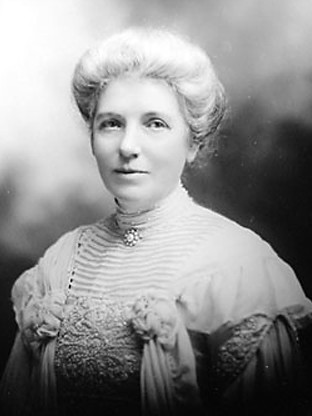
Today, September 19th, is Suffrage Day. 124 years ago today, women gained the right to vote in New Zealand. Its one of our greatest achievements as a nation, and yet its not one we publicly mark. That needs to change: Suffrage Day should be a public holiday. Its certainly better than celebrating a dead religion, a foreign monarchy, or their odious wars.
This year, Suffrage Day has fallen in the middle of an election campaign, so its a particularly appropriate day to advance vote. If you're not sure where to do that, just select your electorate from the list here.
Monday, September 18, 2017
Its going to be a short election night
Advance voting has really taken off this year, with enormous numbers exercising their right to vote early, parties campaigning specifically for advance votes, and queues at some advance polling booths. As of Sunday, 445,000 people had advance voted - more than did so in the whole 2011 election. The number of advance votes look like it will easily surpass the 2014 election as well - but by how many?
Looking at the Electoral Commission's graphs, there's a rough pattern. In 2011, roughly 70,000 people had advance voted a week out from the election, versus a final tally of 334,000. In 2014, the week out number was 179,000 versus a final tally of 717,000. So, the final number is somewhere between 4 and 5 times the week out figure. Applying the lower estimate to Friday's tally of 312,000 gives an estimate of roughly 1.25 million advance votes - or about half the total expected to be cast. And it could be even higher.
Those votes are counted early, starting on election afternoon, and announced shortly after the polls close on election night. Which means that from pretty much the moment the election specials start, we're going to already know the rough shape of the result, and have an idea which of the rival polling houses' models is correct. And with fewer votes to count, the rest of the results should be counted much quicker, giving us a final result much earlier. In other words, unless something goes catastrophically wrong somewhere, it is going to be a very short election night.
Friday, September 15, 2017
National: climate freeloaders
Climate change is the greatest threat humanity has ever faced. Globally, it promises famine, disease, death, and war. Within New Zealand, it promises to destroy our agricultural industry and drown our coastal communities. Labour and the Greens are taking this threat seriously, promising to set a target of carbon neutrality by 2050 to push us down the pathway towards a greener economy. National, OTOH, doesn't care:
Both Labour and Greens, likely coalition partners, have committed to a carbon-neutral country by 2050 - but National won't commit to one of its own - and the party doesn't think it's possible within the next century.
"It certainly won't happen by 2050, it might happen by 2100," he said in the Young Voters' Debate hosted by 1 News.
[...]
"We don't have a stated policy goal of carbon neutrality. Our goal is to meet our international commitments, take climate change seriously, invest in the stuff that actually makes a difference which is the science around agricultural emissions reductions," Mr Bishop said.
"This might not be a popular view, but whether or not New Zealand becomes carbon neutral by 2050, will not stop hurricanes and sea level rise in New Zealand. We are 0.16 percent of global emissions."
And yet National somehow expect other, poorer, countries to make sacrifices that they are unwilling to make, to save their dirty farmer cronies from being driven off the land. Faced with the biggest crisis the world has ever seen, National's policy is simply to freeload off the efforts of others, while doing nothing ourselves, so that their cronies can make money for a little while longer.
That's not the kiwi way. We can and must do better than National's pathetic inaction.
Thursday, September 14, 2017
Labour's tax back-down
So, faced with a campaign of fear, uncertainty and doubt from National, Labour has backed away from any plans to introduce a capital gains tax if elected, and instead punted such decisions until 2020:
Labour will wait until a second term before any tax changes from their working group will be introduced.
It made the u-turn after sustained attacks from the National Party over the vagueness of its tax plans.
Other than their already announced polices - such as cancelling National's planned tax cuts, extending the bright line test to five years, and introducing water and tourist levies - no new taxes or changes will kick in before the next election, Labour said on Thursday.
Its Labour in a nutshell. Promise change, do nothing to make it happen. Talk big about benefitting the many, not the few, then promise to preserve the status quo. And by doing so, rob themselves of any ability to actually effect meaningful change.
And this is why I can never support Labour: they have no courage of their convictions, and stand for nothing beyond their own Ministerial salaries. All they offer is the same old shit, with a different bunch of arseholes at the top. As someone who thinks the status quo is rotten to the core, why would I vote for someone who promises not to fix it?
Wednesday, September 13, 2017
Supporting students
A fortnight ago, Labour announced its bid for the student vote, with a plan to boost student allowances by $50 a week and gradually make tertiary study free. Today the Greens have responded with their own student support package which builds on Labour's. They're suggesting a smaller overall boost to allowances - 20% (so about $40) rather than a flat $50. But the counter to that is the introduction of a universal (and higher) student allowance for post-graduate students. They'd also remove National's unfair lifetime borrowing and allowance limits, which prevent people from continuing study at a time when qualification inflation and rapid changes in employment have made it necessary.
The policy is definitely compatible with Labour's, and the differences are primarily a matter of which problem gets addressed first. Meanwhile, all National is offering students is poverty and debt and workplace exploitation. I guess they just don't want the votes of any students whose parents aren't already filthy rich.
Tuesday, September 12, 2017
Party vote: left
Now that advance voting has opened, things have got real. Who should you vote for? If you read this blog, you probably want a progressive, left-wing government which will reduce inequality, save our rivers, bring our emissions under control, and make houses more affordable. You probably want a Labour-led government, working with the Greens (and possibly the Maori Party) rather than Winston. How do we get that? Simple: give your party vote to one of the components of the coalition you prefer.
That could be Labour, it could be the Greens, it could be the Maori Party - a party vote for any of these three will help. IMHO there are sound tactical reasons for supporting one of the smaller options: to ensure the Greens make it into Parliament (and thus that a left coalition is a real option, rather than Labour being forced into the arms of Winston), and to get the progressive voices in the Maori Party in too (Marama Fox seems pretty solid and very inclined to work with Labour and the Greens, but they need ~2% of the party vote to get her in). If neither of those floats your boat, then vote for Labour. Don't vote for Winston unless you're a racist. And don't bother about TOP, because they're cat-hating arseholes who won't make it over the threshold, so votes for them are simply wasted.
Note that this is a recommendation for your party vote, because that's what determines the overall shape of Parliament and therefore who will be in government. It doesn't really matter what you do with your electorate vote (though if you live in Ohariu, please don't vote for the fascist).
Every party vote counts. If you want change, make sure you vote for it, by party-voting left.
"No rolling back the clock"
Jacinda Ardern gave an interview to Radio New Zealand this morning in which she denounced NeoLiberalism. At the same time, she made it clear that she's not actually going to change it. She won't buy back stolen public assets. She won't raise taxes on the rich or tax wealth with inheritance taxes. She won't change the way the Reserve Bank sets monetary policy (and therefore effectively sets the level of unemployment). She's still committed to the TPPA, with a few cosmetic changes around whether foreigners get to buy houses (as opposed to things like investor-state dispute mechanisms, environmental protection, Pharmac, and American copyright insanity). And she has this position because "there's no rolling back the clock". All the unjust stuff, all the evil committed by Douglas, by Richardson, by Shipley, and by Key and his cronies, all of that will be left unchanged.
And that's the Labour Party in a nutshell: presenting itself as the party of change, but not actually offering anything substantive. Instead, what they offer is the same unjust status quo, with the only real change being which wankers get ministerial salaries. And bluntly, that's no change at all.
Monday, September 11, 2017
Get out and vote!
Advance voting has started for the 2017 election. Yes, that's right - you can vote from today! Personally, I prefer the party atmosphere of election day, but if you want to do it early, you can. And no, you don't need to give a reason.
Emma Hart has a guide to the process on Public Address here. And if you're not sure where to go, just pick your electorate here and the Electoral Commission will tell you.
Friday, September 08, 2017
Labour on climate change
When she relaunched the Labour Party election campaign, Jacinda Ardern called climate change "my generation's nuclear-free moment". And now she's backing that up with a serious climate change policy:
The Labour Party has released its climate change policy, which includes a new goal of net zero carbon emissions by 2050.
Labour leader Jacinda Ardern also said all sectors including farmers would have to pay for their emissions within her first term, though their costs would initially be offset.
[...]
As previously announced, Labour would make legally binding emissions reductions targets and would set up a new government agency to oversee the work.
"For too long, we have set targets and not done what's needed to achieve them," Ardern said.
"That's why Labour will set up an independent Climate Commission to examine what reductions can practically be achieved by each sector and recommend emissions reductions targets."
If this looks familiar, its because its the Greens' climate change policy. And the Parliamentary Commissioner for the Environment's. And Generation Zero's. There's a proven model of what works waiting to be adopted; now Labour has adopted it. And good on them for doing so.
Of course, whether Labour can do this depends on whether they have a supportive coalition partner. The Greens and Labour are on the same page on climate change now. Winston Peters supports the framework of targets, but opposes any actual action to achieve them. So if we want Labour to be able to act (and to hold them to actually acting, rather than cutting sweetheart deals to continue subsidising polluters), we need to make sure they have the Greens as a partner. Our entire future depends on it.
Thursday, September 07, 2017
Nicky Wagner assaults a protestor
Heckling and protest is part and parcel of political campaigning. Its an example of voters' freedom of speech, and you would be hard pressed to claim that there is any prospect of any harm to anyone. Most politicians respond to this by ignoring it; the witty ones engage with it and use it to their advantage. The National Party, OTOH, assaults people:
A protester wearing a suit was yanked away by Christchurch Central MP Nicky Wagner after popping up right behind National Party leader Bill English while he was addressing a large crowd of National supporters in Christchurch.
The man, holding up a large placard protesting battery hen farming, approached Mr English as he gave a speech before Ms Wagner quickly intervened.
She grabbed the protestor under his arms and swiftly lifted him up and pulled him away before member of Mr English's security team ushered the man away.
There's video, and its very clear that this was a peaceful act of protest. Wagner responded by grabbing the protestor. That's clearly assault, and she should be prosecuted for it.
Of course, that will never happen - we all know the police serve the powerful, not the law. But when Gerry Brownlee threw a protestor down a flight of stairs years ago, he was privately prosecuted and convicted. If the police won't do their jobs, the same should happen in this case. Those in power should not be above the law.
A corrupt practice
A Māori Party candidate is being investigated for bribing voters:
The Electoral Commission is investigating a Māori Party candidate's campaign for allegedly offering online cash credits to potential supporters.
The investigation involves complaints that Botany candidate Wetex Kang's campaign sent messages offering credits to people on Chinese social media message app WeChat.
The Electoral Commission said it had received complaints about the use of "hong bao dollars" on WeChat as part of Mr Kang's campaign.
Bribing voters is a corrupt electoral practice, with a penalty of two years imprisonment and a $40,000 fine. Those convicted are also automatically barred from voting and standing for office in the next election. This is such a basic part of our electoral law (and any fair democratic system) that you really have to wonder how a political candidate possibly thought it was acceptable.
Not that anything will happen, of course. Because while the public and the Electoral Commission take electoral crime seriously, the police don't. They're too busy harassing harmless drug users, spying on protesters, and sucking up to Ministers than to protect our democracy.
Time for pay equity
National has responded to the recent aged care workers case with a bill that would make it harder for women to gain equal pay. Fortunately, the Greens have a better plan:
The Green Party would require all workplaces to measure and disclose the pay gap between men and women employees if it gets into government.
The party released its pay equity policy today, saying it would ensure that women were treated equally and paid better.
Co-leader James Shaw said his party would require employers to collect data on the wage rates for men and women, by adding gender to pay roll data.
If any employee or union asked for the information, the employer would have to provide anonymised and aggregated data about the pay and gender of other people doing the same work.
Seeing the difference in pay rates in black and white would encourage employers to change their approach, the party said.
And if it doesn't, then the victims of their discrimination will have the information they need to prove it. This approach is used in Scandinavia, and it works. We should do the same here. But to do that, we need to get rid of National, and change the government.